
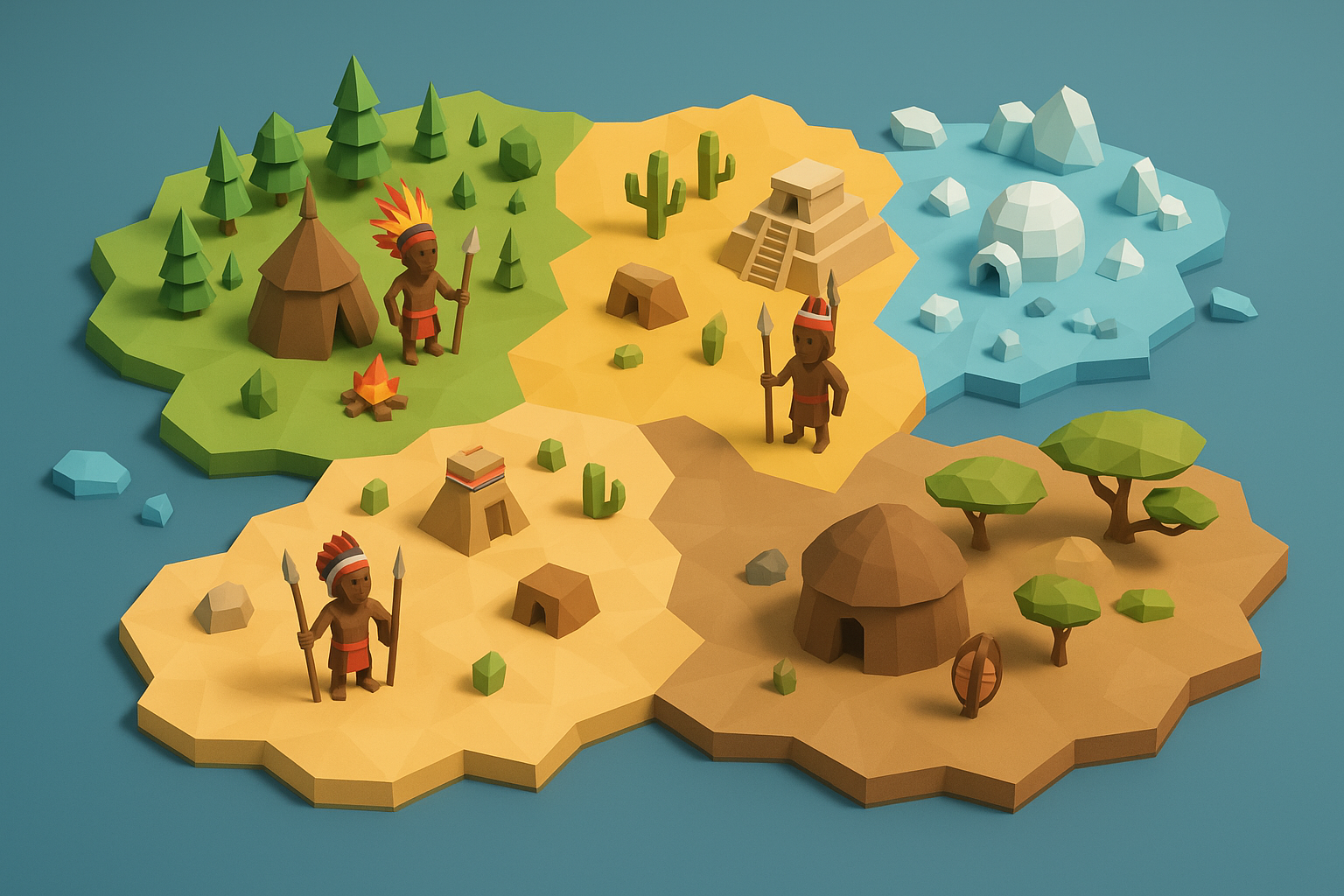
In the bustling world of video gaming, where graphics often trump gameplay in the search for realism, Triberion stands out with its low-poly aesthetic and sharp strategic focus. As a turn-based 4X strategy game, Triberion isn’t just about building a civilization; it’s about navigating a complex web of choices that define the course of your tribe’s evolution.
The game’s core mechanic may seem familiar: explore, settle, develop, and expand. However, the magic lies in the intricate interdependencies that aren’t immediately obvious. Much like a grand chessboard, every move in Triberion influences myriad potential outcomes. Understanding this non-linear complexity is essential for players who want to excel in this game.
The Unassuming Complexity of Land and Resource Management
At first glance, managing a patch of land in Triberion appears straightforward. Each tile presents a unique combination of biomes, resources, and elevation, influencing what you can build and how your people thrive. But dig deeper, and you’ll see that this seemingly simple aspect determines the fate of your civilization.
For example, controlling a region with a mix of fertile plains and rich mineral hills not only accelerates your tribe’s growth but also sets the stage for future advancements. As resources are finite, strategic selection and development of land become an art of foresight and adaptability.
Cultural Distinctiveness: More than Just a Visual Treat
One of the most striking features of Triberion is its array of 36 distinct tribes, each with unique cultural identities and units. Unlike many games where cultures feel like mere skins, Triberion offers a nuanced experience where cultural choices significantly affect gameplay strategy.
For instance, a player aligning with the Mongols will find themselves favoring swift, offensive strategies with their Keshik units, potentially pursuing a path to victory through domination. On the other hand, the Yamato tribe’s Samurai encourages a more balanced approach that could lead to diplomatic triumph by leveraging power with finesse.
Triberion’s deliberate design to offer the same engaging experience across platforms, such as Windows, macOS, Android, and iOS, invites players into its compelling universe seamlessly. This cross-platform capability means your carefully crafted strategies can accompany you anytime, anywhere.
Moreover, in a landscape where details often overwhelm new players, the visual clarity of a low-poly aesthetic ensures that strategic elements take precedence over graphic fidelity. Triberion uses this simplicity to enhance player focus on tactical depth and planning.
Beyond the Obvious: Paths to Victory
Interestingly, the path to victory in triberion is not singular. Each victory condition—be it domination, trade, diplomacy, or culture—demands a distinct approach. The key is to align with your tribe’s strengths while adapting to the evolving world around you.
Trading tribes will find themselves immersed in the art of negotiation and resource management, fostering economic powerhouses. Diplomatic victories, meanwhile, require a delicate balance of influence and relationship-building, making each decision resonate far beyond the immediate turn.
For players seeking to dominate cultural influence, developing arts, philosophy, and innovation becomes crucial, allowing you to overshadow rivals with elegance. Triberion’s multifaceted victory conditions ensure that while each game may start similarly, no two journeys are the same.
In Triberion, the path to building a civilization is a dance of many steps, each requiring consideration and adaptability. Its balance of strategy, cultural depth, and visual simplicity creates a rare gem in the world of 4X games, promising endless opportunities and challenges for seasoned strategists and newcomers alike.
